


High Risk Pregnancy Management in Kolkata
Pregnancy is meant to be a happy time for women. For others, however, it may come with some additional challenges. If your doctor has classified you as having a “high-risk” pregnancy, chances are you have a lot of questions. That makes sense. Let’s go through everything you need to know about “high-risk pregnancy management in Kolkata.” Dr. Jayanta Kumar Gupta will give you a roadmap to help address the situation.
What Does “High Risk Pregnancy” Actually Mean?
A few factors determine if you fall into this category. One, you may be considered high risk due to your age or any preexisting medical conditions. Two, you may have encountered problems during your pregnancy thus far, or be in a high-risk group. Either way, you will likely be asked to take extra precautions.
A high-risk pregnancy doctor in Kolkata suggests that you need to take extra precautions to prevent complications.
Common Causes of High-Risk Pregnancy
Now is the time to ask yourself, “What caused my high-risk pregnancy?” The following factors may have contributed to your situation:
- Being under 18 or over 35
- Preexisting diabetes, hypertension, or thyroid problems
- Multiple pregnancies (twins, triplets, etc.)
- History of miscarriages or preterm births
- Gestational diabetes or preeclampsia
- Placental problems
- Obesity or extreme underweight
The reason why these roadblocks exist is that everyone’s situations are different. Therefore, every person has their own “high-risk pregnancy management in Kolkata” plan. With that being said, let’s continue to the next topic of concern: warning signs.
Warning Signs You Should Never Ignore
Some symptoms require immediate medical attention. Therefore, it’s important for you to be able to identify them. That brings me to the list of warning signs that you should watch out for:
- Intense or persistent headaches
- Sudden hand or facial swelling
- Vaginal bleeding
- Decrease in fetal movement
- Changes in vision or feeling dizzy
- Severe abdominal pain
These are just some of the most common warning signs that you may encounter throughout your pregnancy. It’s best to consult your doctor for any of these symptoms, as they can potentially prevent further issues from occurring.
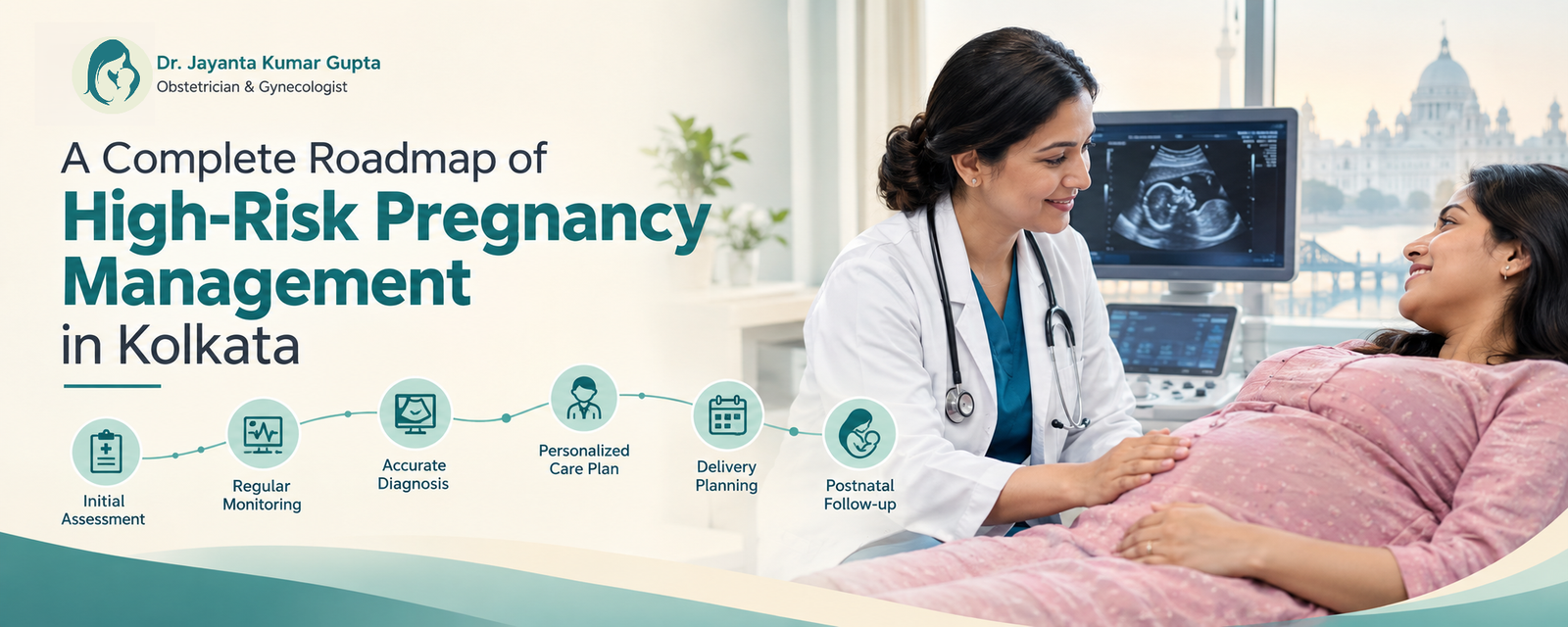
The Complete High-Risk Pregnancy Management
It’s time to discuss the “high-risk pregnancy management in Kolkata” system itself. Let’s break this down step by step.
Stage 1: Preconception Counselling
Preferably, you want to take precautions even before becoming pregnant. This way, you can eliminate certain factors that could negatively impact you or your child. During this time, your doctor will review your personal and family history. In addition, run a few screenings and adjust any medications you may currently be taking.
Stage 2: First Steps
Although high-risk pregnancies usually form before conception, this is the point where many become apparent. Your doctor will take action to ensure that you and your child are developing properly.
Common actions your physician will take during this time include, but are not limited to: confirming pregnancy, screening for chromosomal irregularities, testing blood sugar, checking thyroid function, as well as screening for high blood pressure.
Your physician will also prescribe prenatal vitamins such as folic acid. Finally, your doctor will discuss with you and your partner any changes you should consider making to your lifestyles. Only then high-risk pregnancy management in Kolkata will have its value.
Stage 3: Second Stage
During the second stage, most concerns begin to disappear. That being said, doctors continue to take precautions to ensure optimal fetal growth and development. Throughout the course of the second stage, you will have monthly examinations. This allows you and your doctor to keep an eye on your health and your child’s well-being.
Common tests during this time include anomaly scans as well as glucose screening. If no issues are apparent, you may continue receiving regular blood pressure, weight, and blood sugar tests. Contrarily, if your doctor notices an issue, your visits may become more frequent than monthly.
Stage 4: Third Stage
As you approach your due date, your visits to the doctor will likely occur around once a week. Your doctor will keep an eye on your baby’s well-being in addition to tracking your blood pressure and amniotic fluid. Since many birth complications occur during this time, your doctor will remain at the highest level of prenatal care.
Stage 5: Delivery
Your doctor will advise you on the safest way of delivering your child. Depending on your situation, some high-risk pregnancies may require cesarean delivery. However, your physician may also advise you to have a vaginal childbirth. Either way, your hospital will formulate a birthing plan to help you get through this process safely.
Stage 6: Postpartum Process
Finally, your doctor will also keep an eye on you and your child after the birth. Having a high-risk pregnancy is not an isolated episode. In fact, your physician will continue to take precautions even after delivery to ensure you’re recovering properly.
Why You Need an Experienced Doctor
Now that you know what to expect, let’s talk about why you need to choose the right doctor for this situation.
An experienced high risk pregnancy doctor in Kolkata offers several benefits. Some of these benefits include: access to leading-edge diagnostic technology, collaboration with experts, 24/7 intensive care in addition to personalized precautions, and more.
How Professionals Offer Support for Your Needs
Dr. Jayanta Kumar Gupta is well-versed in all pregnancy matters. From the moment you walk in, he focuses on a unique “high-risk pregnancy management in Kolkata” program tailored just for you. We will also make sure that you get the benefit of top-level advice and diagnostics during your stay with us. After all, no one wishes to be in an emergency when it comes to their health. The better prepared you are, the more chances you have of making a full recovery. If you fall into the category of those suffering from a high-risk pregnancy, now is the time to take action.


